Construction
Portable Class B kits, bleeding control, eye wash, cold packs, and weather-resistant cases for trailers and foremen vehicles.

First aid and emergency response supplies should reflect where injuries are most likely to happen, how far workers are from professional medical care, and who is responsible for inspecting the kit after each use. First Aid Only organizes programs by work area so safety teams can separate standard first aid supplies from higher-risk response modules and keep purchasing focused on what is actually needed.
For each industry, the planning logic stays disciplined: identify routine minor injuries, document kit class expectations, add supplemental modules only where hazards justify them, and keep refill ownership visible. This avoids both understocked cabinets and oversized catch-all kits that look impressive but do not get maintained.
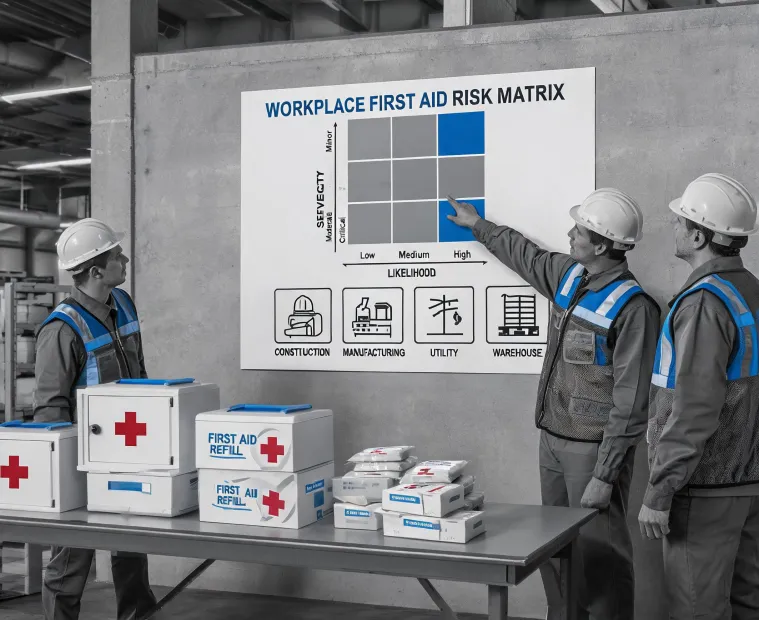
These bundles are planning examples. Final kit selection should follow site hazards, headcount, shift structure, applicable regulations, and medical guidance.
Portable Class B kits, bleeding control, eye wash, cold packs, and weather-resistant cases for trailers and foremen vehicles.
Wall cabinets with burn care, fingertip bandages, antiseptic wipes, and refill bins near production cells.
Remote-site kits, eye irrigation, heat stress supplies, CPR barriers, and documented inspection cards for dispersed crews.
Vehicle kits, minor burn supplies, cold packs, and depot replenishment routines that pair with PPE inspections.
Fleet pouches, AED-adjacent support items, gloves, absorbent dressings, and response room staging.
Detectable bandages, sterile dressings, controlled refill logs, and supply separation for GMP-sensitive work areas.
The table helps EHS and purchasing teams keep the conversation specific. It avoids generic kit claims and ties supplies to realistic hazards and documented planning references.
| Workplace | Primary Hazards | OSHA / ANSI References | Recommended First Aid Bundle |
|---|---|---|---|
| Fabrication | Cuts, burns, eye irritation | OSHA 1910.151; ANSI Z308.1-2021 | Class B cabinet, burn care, eyewash, nitrile gloves |
| Warehouse | Sprains, abrasions, minor bleeding | OSHA 1910.151; ANSI Z308.1-2021 | Class A cabinet, cold packs, wound care refills |
| Remote Construction | Delayed medical access, weather exposure | OSHA 1926.50; ANSI Z308.1-2021 | Portable Class B kit, trauma pouch, inspection tags |
| Food Processing | Minor cuts, hygiene control | OSHA 1910.151; site GMP program | Detectable bandages, sterile pads, controlled refill log |
Consolidated five cabinet types into two approved kit classes, then created refill packs for wipes, bandages, burn gel, and cold packs. The purchasing team retained distributor flexibility while supervisors gained a consistent inspection card.
Moved vehicle kits into a depot replenishment cycle and separated emergency response pouches from routine wound care. The result was a cleaner issue process for field crews and fewer partial kits returning after service calls.
Added detectable bandage guidance, hygiene-focused refill storage, and documented cabinet checks to support internal audits. The program avoided broad medical claims and stayed focused on first aid supply readiness.
First Aid Only planning notes distinguish workplace first aid compliance language from product approvals. OSHA workplace rules such as 1910.151 and 1926.50 guide employer obligations, while ANSI Z308.1-2021 describes minimum kit classifications and supply contents. When a site needs AEDs, emergency showers, or clinical guidance, those decisions should be reviewed with qualified professionals and local requirements.
Send your workplace type, estimated headcount, and current kit arrangement. We will help frame a category-level plan for first aid supplies, refill controls, and distributor support that can be reviewed by your safety leadership.